In many developing countries, water management has become a critical challenge due to rapid urbanization, population growth, and increasing pressure on infrastructure. Traditional mechanical water meters, which have been widely used for decades, are gradually being replaced by smart water meters as governments and utilities seek more efficient, accurate, and sustainable solutions.
Mechanical water meters have long been the standard solution for measuring water consumption. While they are simple and relatively affordable, they come with several limitations that make them less suitable for modern water management systems.
Firstly, mechanical meters are prone to wear and tear. Over time, internal components such as gears and impellers degrade, leading to inaccurate readings. In many developing countries where maintenance cycles are irregular, this issue becomes even more severe.
Secondly, manual meter reading is labor-intensive and inefficient. Utility companies often rely on field workers to collect data physically, which increases operational costs and introduces human error. In remote or densely populated urban areas, this process becomes even more challenging.
Another major concern is water loss. Mechanical meters are unable to detect leaks or abnormal consumption patterns in real time. As a result, non-revenue water (NRW) remains a significant problem in regions across Africa, Southeast Asia, and parts of the Middle East.
Smart water meters are transforming how utilities manage water resources. Unlike mechanical meters, smart meters use electronic sensors and digital communication technologies to provide accurate, real-time data.
These systems are often integrated with IoT technologies such as NB-IoT, LoRa, or GSM networks, enabling remote monitoring and data transmission. This eliminates the need for manual readings and allows utilities to access consumption data instantly.
For example, modern smart water metering solutions can automatically upload usage data to centralized platforms, providing utilities with valuable insights into consumption patterns and system performance.
Smart water meters use advanced sensing technologies such as ultrasonic or electromagnetic measurement, which are far more accurate than traditional mechanical systems. This ensures fair billing and reduces disputes between utilities and consumers.
One of the most significant advantages is real-time data access. Utilities can monitor water usage continuously and identify unusual consumption patterns immediately. This is particularly useful for detecting leaks, illegal connections, or system inefficiencies.
Water loss is a major issue in developing countries, with some regions losing up to 40% of their water supply. Smart meters help reduce NRW by providing precise data and enabling faster response to leaks or theft.
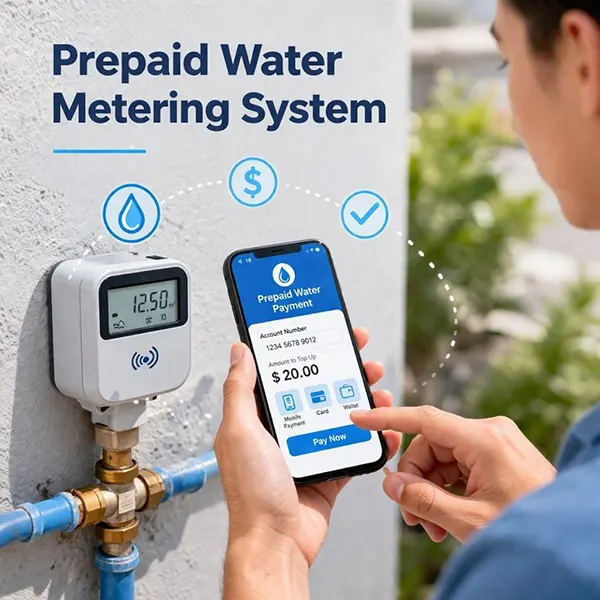
In many developing markets, prepaid systems are becoming increasingly popular. Smart meters allow users to pay in advance for water usage, similar to prepaid electricity systems. This improves revenue collection for utilities and gives consumers better control over their expenses.
By eliminating manual meter reading and reducing maintenance requirements, smart metering systems significantly lower operational costs for utilities. Over time, this leads to higher efficiency and better resource allocation.
The adoption of smart water meters is accelerating across developing countries.
In Africa, countries such as Kenya, Nigeria, and South Africa are investing in smart metering solutions to combat water loss and improve billing systems. Prepaid water meters are especially popular in urban housing projects and community water systems.
In Southeast Asia, governments in countries like Indonesia, Vietnam, and the Philippines are integrating smart water management systems into their smart city initiatives. These projects often include remote monitoring platforms and data analytics tools.
Central Asian countries are also beginning to adopt advanced metering technologies, particularly ultrasonic water meters, due to their durability and high accuracy in varying environmental conditions.
Despite the advantages, the transition from mechanical to smart water meters is not without challenges.
Initial investment costs can be higher compared to traditional meters. However, the long-term savings and efficiency gains often justify the investment.
Infrastructure limitations, such as unstable communication networks, can also affect implementation. To address this, many smart meter solutions are designed to work with multiple communication technologies, ensuring flexibility in different environments.
Training and technical support are also important factors. Utilities need to develop the necessary expertise to manage and maintain smart metering systems effectively.
The shift from mechanical to smart water meters represents a significant step toward digital transformation in water management. As technology continues to evolve, smart metering systems will become even more advanced, integrating with AI, big data analytics, and cloud platforms.
For developing countries, this transition is not just about upgrading equipment—it is about building a more sustainable and efficient water management system that can support future growth.
The replacement of mechanical water meters with smart water meters is a clear trend across developing countries. Driven by the need for accuracy, efficiency, and better resource management, smart metering solutions are becoming the new standard.
Utilities that embrace this transformation will be better equipped to reduce water loss, improve revenue collection, and provide more reliable services to their communities.
As urbanization continues to accelerate, smart water meters will play a crucial role in shaping the future of water infrastructure worldwide.